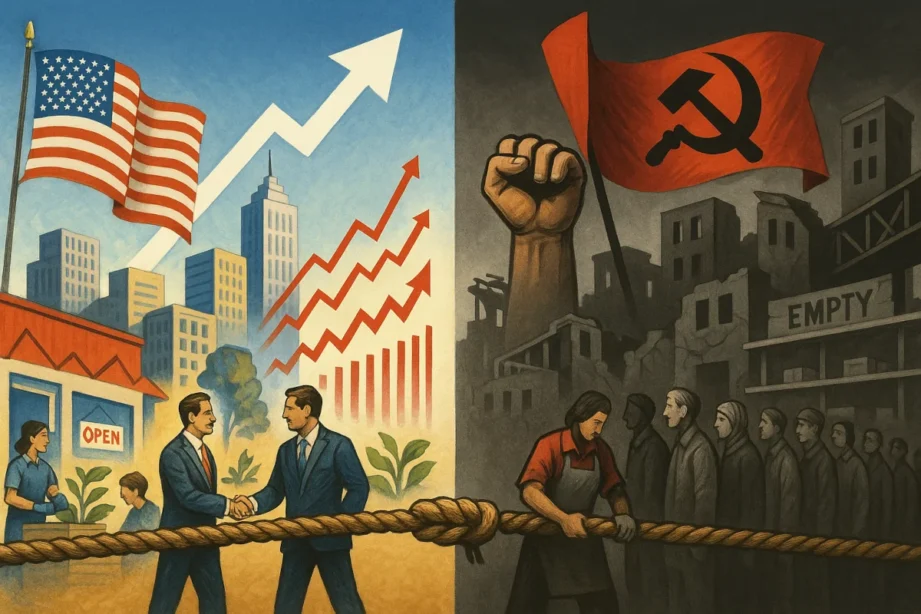
Socialism often presents itself as a solution to inequality, promising that governments can redistribute wealth and guarantee basic needs for all. Yet history shows that socialism cannot generate the wealth it relies on; it depends on the productivity, innovation, and investments that only capitalism can create.
Countries that have attempted socialist policies, such as Venezuela, Cuba, and Argentina, initially relied on capitalist structures, natural resources, private enterprises, and trade, to fund social programs. Over time, socialist policies dismantle these productive systems, eroding economic stability and undermining individual freedom. For Hispanic communities, understanding this cycle is critical to preserving opportunity, independence, and family prosperity.
Sponsors of the Latino & Hispanic Republican Executive Club
Socialism’s Dependence on Capitalist Foundations
Socialist governments do not start from nothing. They inherit industries, businesses, and infrastructure that were built under capitalist principles. Revenue from private enterprise, exports, and investments is often the primary funding source for government programs. While socialist policies emphasize redistribution and control, they cannot generate new wealth on their own. As private businesses shrink or are nationalized, and as incentives for entrepreneurship are reduced, the economy slows. Without the productive engine of capitalism, social programs falter, shortages increase, and governments struggle to meet promises made to citizens.
Sponsors of the Latino & Hispanic Republican Executive Club
Historical Patterns of Collapse
Argentina: Repeated cycles of heavy taxation, price controls, and government intervention in markets discouraged private enterprise and foreign investment. Inflation skyrocketed, and industries failed, demonstrating how socialist policies can weaken economies built on capitalist success.
Venezuela: Once a prosperous nation with significant oil reserves, Venezuela implemented aggressive government control over industries and price regulations. Initially, oil profits sustained social programs, but when production declined and private investment fled, the country experienced hyperinflation, extreme shortages, and mass immigration.
Cuba: After nationalizing farms and businesses, Cuba relied heavily on aid from the Soviet Union. When that support disappeared, the economy stagnated, food and medical supplies became scarce, and citizens faced widespread hardship.
Impact on Hispanic Communities
In countries affected by socialism, Hispanic families often experience a reduction in economic opportunity and the erosion of family-owned businesses. Entrepreneurs face barriers to growth, and many skilled workers leave in search of stability and opportunity. In contrast, Hispanic communities in free-market economies benefit from private property rights, access to capital, and the ability to pursue independent business ventures. By understanding how socialism can erode economic independence, Hispanic families can prioritize policies and practices that protect entrepreneurship, savings, and generational wealth.
Sponsors of the Latino & Hispanic Republican Executive Club
Hispanic culture prizes hard work, family, and self-reliance — values that thrive under capitalism. Policies that protect private property, reduce burdensome regulations, and incentivize entrepreneurship strengthen communities and empower families. By studying the historical consequences of socialism, Hispanic Americans can recognize the importance of economic freedom, preserve opportunities for the next generation, and resist policies that undermine prosperity and personal responsibility.
FAQs Q: Can socialism function without capitalist wealth? A: Historical evidence shows that socialism relies on wealth generated under capitalism. Without private enterprise and investment, social programs become unsustainable.
Q: How can Hispanic communities safeguard against the negative effects of socialism? A: By encouraging entrepreneurship, protecting private property, and advocating for economic policies that incentivize growth and independence, Hispanic families can maintain prosperity and freedom.
Angel Ramos is a dedicated professional engaged in community outreach, messaging, and strategy development. He focuses on connecting with voters, promoting conservative values, and driving initiatives that strengthen local leadership and civic participation. He currently serves as President of the Latino & Hispanic Republican Executive Club and Secretary of the RPOF Hispanic & Latino Coalition, leading efforts to empower Hispanic communities in politics and amplify their voices within the Republican Party.